


Wine Tasting: How to Taste Wine Properly – Step by Step
Taste wine like a pro – with simple steps for colour, aroma, flavour and your own tasting note.
Wine tasting does not have to be formal or complicated. You do not need a huge vocabulary of aromas to taste wine consciously – all you need is a few minutes and a simple sequence for sorting your impressions. You will quickly notice whether you enjoy a wine, why you enjoy it and which styles you may want to choose more often in future.
Whether you are tasting on your own, with a partner or with friends, a little preparation turns a glass of wine into a small journey of discovery. This guide takes you from choosing a glass through colour and aroma to flavour, finish and your own tasting note.
Preparation: glassware, temperature and tasting order
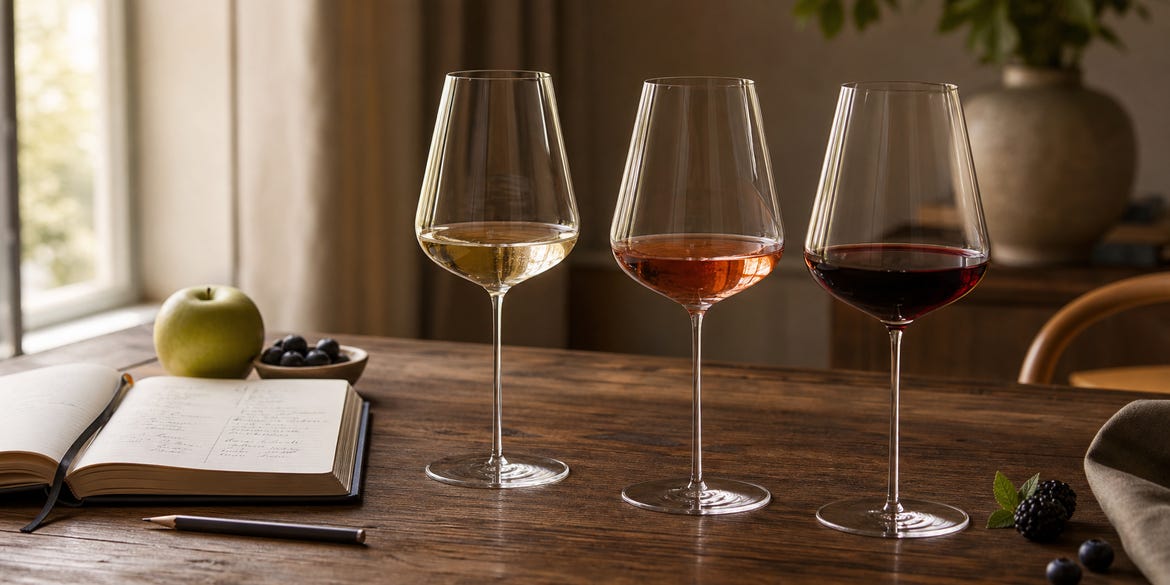
A clean, neutral glass with a generously sized bowl makes a noticeable difference. It gathers aromas without spilling when you swirl the wine. Fine, elegant Sophienwald wine glasses are especially enjoyable: the thin rim keeps the focus on the wine rather than the glass. Pour only around 50 to 75 ml for each sample – that is plenty and leaves enough room for aromas to develop.
Temperature also changes your impression dramatically. White wines are usually fresh and precise at 8 to 12 °C, rosé at around 10 to 12 °C. Light reds can be served slightly chilled, while fuller reds often show their best at 16 to 18 °C. If a wine is too cold, it becomes muted; if it is too warm, alcohol can quickly dominate.
When tasting several wines, keep the order simple: dry before sweet, light before full-bodied, young before mature, and white before red. Water and plain bread help reset your palate between samples. Around a tasting, it is best to avoid strongly spiced food, coffee, chewing gum and heavily perfumed rooms.
Wine tasting at a glance
| Step | What to observe | Helpful questions | Examples for your note |
|---|---|---|---|
| 1. Look | Clarity, colour, intensity | Is the wine clear? Is it pale or deep in colour? | lemon yellow, straw yellow, ruby red, deep-coloured |
| 2. Smell | Aroma, intensity, development | Does it suggest fruit, flowers, spice or oak? | apple, cherry, citrus, violet, pepper, vanilla |
| 3. Taste | Acidity, sweetness, tannin, alcohol, body | Does it feel fresh, soft, powerful or dry? | juicy, creamy, taut, velvety, spicy |
| 4. Finish | Length and aftertaste | Does the flavour fade quickly or remain? | short, medium or long finish |
| 5. Overall impression | Balance and personal enjoyment | Would I drink it again – and with what food? | harmonious, exciting, easy-drinking, food-friendly |
Step 1: Look at the wine
Hold the glass against a bright, preferably white background and tilt it slightly. Begin with clarity: does the wine look brilliant and clear, or slightly hazy? A small deposit can be perfectly normal in natural or mature wines. In a young, clear wine, unexpected cloudiness is a reason to take a closer look.
Then consider colour. White wine ranges from almost colourless through greenish-yellow and lemon to gold or amber. Rosé can be pale salmon, pink or vivid. Depending on grape variety and age, red wine may look purple, ruby, garnet or slightly brick-coloured at the rim. Colour does not tell you everything, but it offers first clues about grape, maturation and age.
When you swirl the glass, you may see tears or legs on the inside. They are not a quality rating. They can, however, hint at higher alcohol, sugar or extract. Treat them as one small observation; what matters most is how the wine smells and tastes.
Step 2: Smell and discover aromas
Aroma is one of the most exciting parts of wine tasting. First take a quick smell without moving the glass. Then swirl gently and smell again. Contact with oxygen allows many aromas to open up. Do not bury your nose too deeply in the glass and do not try to identify a long list immediately.
Start broad instead: does the wine smell fruity, floral, herbal, spicy, woody or earthy? Then become more specific. White wines often suggest citrus, apple, pear, peach or tropical fruit. Red wines may bring cherry, berries, plum, blackcurrant, pepper, herbs or a touch of cocoa. There is no single correct answer: if an aroma reminds you of something, that is your valid perception.
Also notice intensity and whether the aroma smells clean. A clear, pleasant nose suggests a sound wine. Musty cardboard, obvious cork taint or a sharp vinegar smell can point to a fault. These impressions are uncommon, but useful to recognise – especially because they show that a wine is not simply a matter of personal taste.
Step 3: Taste the wine
Take a small sip and move it around your mouth briefly. Your first impression often tells you whether the wine feels light or powerful, fresh or soft, dry or fruit-forward. Do not swallow at once: give the wine a few seconds so you can notice acidity, tannin, alcohol and aromatic intensity.
For white wine and rosé, acidity is particularly important. It creates freshness, juiciness and drive; it can feel mild and round or lively and taut. Red wine adds tannin, which can feel slightly drying on your gums. Tannin is not a flaw – it gives structure, works well with food and can be either velvety or very firm.
Body matters too. A light wine feels lean and uncomplicated, while a full-bodied wine feels dense and powerful. Alcohol brings warmth, and residual sugar can increase the impression of fruit and softness. The key is balance: a good wine does not need to be intense in every area, but its elements should work together harmoniously.
Finish, balance and overall impression
After swallowing, flavour stays with you for a while. That is the finish. A short finish is not automatically a bad thing – many easy summer wines are meant to be light and direct. In more complex wines, a long, clear aftertaste is often a sign of quality because aromas keep developing and reveal new nuances.
At the end, ask yourself: is the wine balanced? Does anything dominate, such as alcohol, acidity or sweetness? Does it change in the glass? And most importantly: do you want another sip? This final question is often more honest than any score. Wine tasting is not about finding the best wine for everyone, but the right wine for your taste and the occasion.
Your tasting note: short, personal and useful
After each sample, write down only a few keywords: colour, two or three aromas, flavour, finish and your overall impression. Add what food you would serve with it – pasta, cheese, grilled dishes or simply a relaxed evening on the terrace. After a few tastings, patterns will emerge. You may discover that you especially enjoy fresh, citrus-driven whites or red wines with soft tannins and ripe fruit.
For a tasting at home, three contrasting styles work particularly well: for example a fresh white, a fruity red and a more powerful red. A carefully selected wine package makes it easy to compare several styles directly. Do not taste with the aim of analysing everything; taste to experience differences consciously.
Common mistakes in wine tasting
- Overfilling the glass: there is then hardly any room to swirl and smell.
- Wine that is too cold or too warm: aromas become either muted or alcohol starts to stand out.
- Judging too quickly: many wines show much more after a few minutes in the glass.
- Tasting too many wines at once: three to five samples are ideal for beginners.
- Forcing specialist terms: describe honestly what you notice instead of searching for perfect expert language.
With every tasting, your sensory memory improves. You will recognise aromas more quickly, understand your preferences better and find the right wine for food, an occasion or a gift more easily. That is what wine tasting is about: staying curious, tasting consciously and developing your own palate.
Latest reviews
-
Ultimate Provence Côtes de Provence Rosé 2025, 0,75 L
- Dry, delicate rosé wine
- Right on trend and very elegant
- Classy, stylish and typical of Provence
-
-
Leo Hillinger Constantia HILL red 2020 2 +1 Free, 3x 0.75l
- Typical New World blend
- Supple with lots of power and fruit
- Universally pleasing
-
-
Kopfensteiner Border 2021, 0,75 L
- A dry, powerful red wine cuvee
- Blaufränkisch, Merlot & Cabernet Sauvignon
- 20 months in barrique barrels
-
-
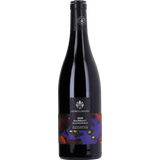
Gesellmann hochberc 2022 Bio, 0,75 L
- 98+ A la Carte points
- 100% Blaufränkisch icon
- 30 months in 500-litre oak barrels
-



Magazine Articles:
-
Switzerland: Free standard delivery from CHF 80.00
-
We operate in a
climate-conscious manner. Secure payments
with SSL encryption technology